Engineering firms

Strengthen your analyses and recommendations

Manual characterizations take time, vary from one operator to the next, and don’t always deliver the precision needed to back up solid recommendations.


With Akanthas, offer your clients an innovative service: characterizations that are faster, more reliable, and safer.

Engineering firms
waste types identifiable by our AI
+ 0
faster than manual methods
0 x
savings on characterization costs
0 %
Your challenges

The challenges engineering firms face

The pressure to innovate

With a crowded competitive landscape and certain tasks that eat up time, bringing AI into your processes has become necessary.

Recruitment difficulties

You regularly run into hiring issues for characterization operators. You keep training new recruits who may make mistakes — limiting characterization precision.

Sample sizes that are too small

You have to run characterizations on samples that aren’t always representative of the waste stream you’re analyzing.
Time savings

Save time on every characterization

With automatic waste identification, characterization goes from several hours to a few minutes.


Straight on your client’s site, deploy the device effortlessly. Then trigger the analysis of a waste stream in a few clicks — our sensor identifies every visible item.


Save precious time on reporting, too. A full report is auto-generated at every characterization.
Let the AI handle the most time-consuming tasks.

Back your recommendations with reliable data

Our patented AI identifies more than 60 waste categories, guaranteeing standardized, comprehensive, and objective analysis.


By removing physical sorting work, Akanthas doesn’t just reduce human error — it reduces risk to your teams.


Less handling, less exposure to sharps, hazardous substances or undesirable objects: characterization becomes safer for everyone.


From the dashboard, you can complete or adjust the analysis to reach maximum precision.

Automatic inspection of unloadings
Stand out from the competition

Stand out from the competition

Gain a competitive edge by offering audits that are faster, more reliable, and safer.


By automating time-consuming tasks, increase your capacity to handle more projects without compromising quality. For example, automatic identification of recoverable materials lets you advise clients more effectively on their recovery strategy.


Let the AI handle data analysis and formatting — and finally focus on your core business.

Features

Features built for engineering firms

Waste Quality

Advanced automated characterization

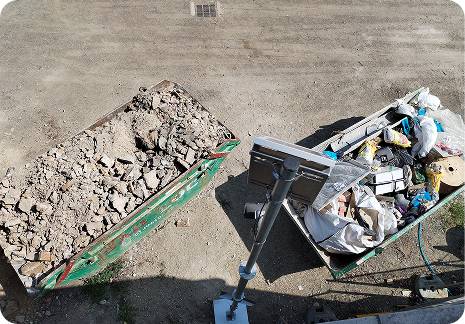
Our sensors with embedded AI run automated characterization on visible waste. Each one can cover up to 4 containers or a 100 m² ground area.


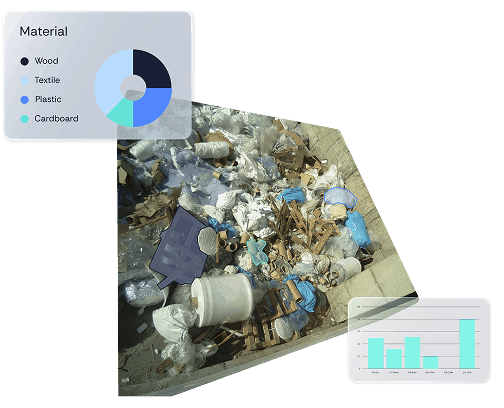
Waste is identified then classified across multiple criteria:

Automatic characterization

Automated reporting

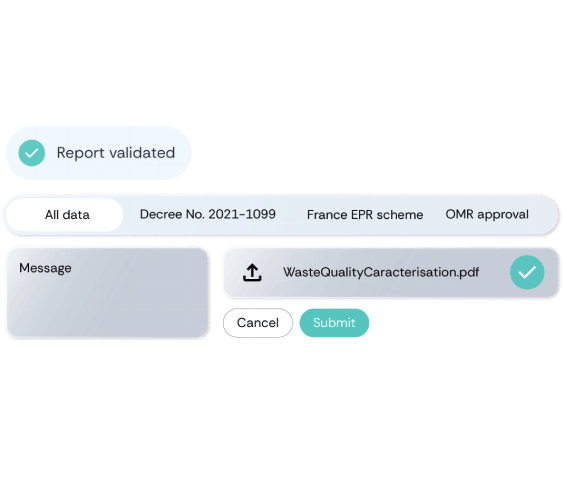
Akanthas auto-generates formatted characterization reports with visual evidence. For each flow, download a report 100% compliant with:
Need the raw data? Download it in CSV format directly from your dashboard.
Visualization and adjustment

Visualization and adjustment

For every characterization, you can visualize the different identified materials separately.


Need to clarify something on a specific item? Annotate the analysis directly by pinning comments on the photo to complement the AI’s work — and sharpen your audit.

Capteur Akanthas

Mobile device

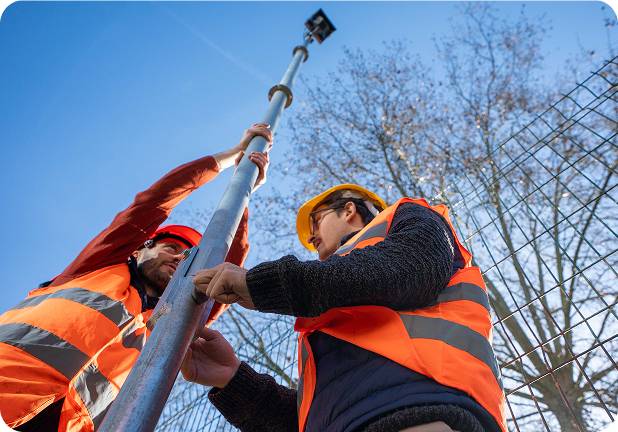
Solar-powered and equipped with a 4G antenna, our sensors require no construction work. Our mobile device lets you deploy a sensor directly on the client’s site using a telescopic mast.


Our team trains you to use it so you can operate fully independently — we show you how to:

Comparison

A complementary
method

Our automated waste characterization solutions complement manual methods — for results that are faster and safer.
Criteria MODECOM Weight-based
characterization
Visual
characterization
Type of characterization Manual Manual Visual Automatic
Frequency One-off (rare) One-off (a few times/year) Very frequent but superficial Very frequent and automatic
Representativeness High but limited sample Variable depending on opened batches Low (subjective, narrow scope) Very high (analysis of all flows)
Time required About 5 to 7 hours Over 4 hours A few minutes A few minutes
Operator safety High exposure High exposure High exposure Zero risk exposure
Objectivity Standardized method, but handled by humans Risk of human bias Highly subjective 100% algorithmic, defensible
Overall cost Very high High Low but limited quality Low (amortizable, no mobilization)
Type of data Quantitative, standardized Quantitative but sampled Qualitative and indicative Quantitative, continuous, granular
Use for operational steering Low (one-off sample) Medium (corrected by frequency) Low (not usable in depth) Excellent (frequent, comparative, continuous)
Regulatory / EPR usefulness Strong: official standard Medium Low Strong: defensible data, frequent
Level of detail 120 categories Simplified Limited 60 categories and 6 classification types: mass, volume, objects, EPR, recovery channel, particle size

Process

How does a characterization work?

Case studies

These engineering firms
already use Akanthas

They trust us
Testimonials

What our customers say

Inddigo
“We’re proud to have integrated AI and image recognition into our characterization missions. It ensures representativeness and impartiality in the results — while improving our technicians’ working conditions.”
Nicolas Klethi

Nicolas Klethi

National Technical Manager, Characterization
Champs Jouault
“We use the characterization reports Akanthas provides to propose solutions to our clients — so they can make the most of their waste.”
Simon Loisel

Simon Loisel

Managing Director
Veolia
“The Akanthas solution delivers a result that’s always based on a standardized system, without the subjectivity of the human eye. Beyond the reliability of the outcome, operational work becomes easier. A secure, reliable, and fast solution for characterization.”
Samuel Chazarin

Samuel Chazarin

Innovation Manager
Tailored solution

Everything you need — only what you need

Choose the modules your business needs and never pay for features you won’t use.


A complete, tailored tool that evolves alongside your needs.

Akanthas

Blog

Resources & news

Read the latest from our waste management specialists.

Get our brochure

Receive our full brochure by email to explore the benefits and mechanics of our solution for engineering firms.
Frequently asked questions

Got a question?

The answer might already be here.

Our solution doesn’t replace MODECOM: it complements it — and sometimes serves as an alternative, depending on the use case. MODECOM and AFNOR standards remain references, but they’re manual, one-off, and costly methods, run on small samples.


On our side, we bring continuous, automated characterization based on larger volumes, with a high level of reliability. For many needs (internal KPIs, EPR obligations, regular monitoring), our approach is already being used as support — or even as the basis for decision-making — because it’s more responsive, less intrusive, and far more economical.


And if needed, our results can be cross-checked with a MODECOM campaign to round out the analysis.

Our AI’s recognition capability depends on the type of object, how often it appears in your flows, and the quality of the images captured.


For the most common objects, our models are already trained. For more specific cases, we gradually enrich our database with images collected on your site and your field feedback.


Our AI identifies material families and standard objects observable to the human eye. On the other hand, it doesn’t perform chemical composition analysis (for example distinguishing PP, HDPE, etc.).


Like any learning system, its performance evolves with exposure: the more it observes, the more it learns — and the more precise it becomes. Some rarely-occurring materials (like asbestos) are still less well-recognized, but will strengthen as real examples are observed. It’s an evolving system that gets more powerful as it observes your flows.

We’re not selling a concept: our algorithms are already deployed in the field, in complex settings, and their effects are measurable.


They translate into fewer reclassifications, better-managed pickups, time saved, and stronger reliability. We understand that AI stays abstract as long as you haven’t seen the results.


That’s why we systematically provide visual evidence, data, and specific examples of what our AI actually detects. You can see for yourself that it’s not a vague promise, but a documented operational reality.

Akanthas can adapt to different situations. We can prepare the ground together, refine the scope, document potential gains, and be ready for the next budget window.


We can also consider a very limited test or a light first step to start capturing value without committing a large budget — and validate the solution’s relevance right now.

Several companies — like Veolia, Spie, Paprec and Suez — as well as local authorities, already use our sensors and our fill, characterization, or estimated weighing solutions (across varied contexts such as bulky waste, drop-off centers, or landfills).


We can share a reference list with their agreement and, if you’d like, connect you directly with one of their managers for a direct exchange.

Akanthas solutions

Our solution for engineering firms

Put AI to work on your audits.
Waste Quality Solution

Waste Quality

Automate advanced waste characterization and regulatory report generation.
Scroll to Top