Akanthas

Put AI to work on waste management

From collection to recovery, get a complete, transparent view of your waste streams — so you can cut costs, streamline logistics and stay compliant.
They trust us

For whom?

The solution for the waste management industry

From production to recovery, our solutions help companies serious about waste management raise their operational performance.

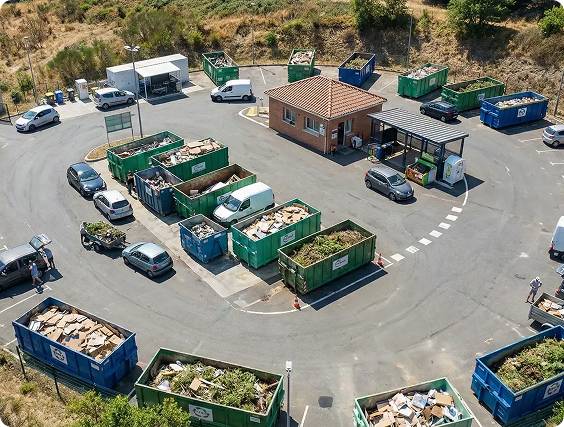
For waste drop-off centers

To fulfill their mission, drop-off centers must cut unnecessary pickups, maintain high sorting quality and deliver transparent reporting — all at once.


With Akanthas, monitor each container’s fill level in real time to optimize rotations and bring down contamination rates.


With detailed, accurate statistics, track every site precisely and strengthen the traceability of your flows.

Waste drop-off centers
= €3 saved
0 invested
fewer unnecessary pickups
0 %
saved per month on average
0 hrs

For sorting and treatment centers

Unloading inspections, waste characterization, dispute management and reporting tie up massive amounts of time, money — and risk.


With Akanthas, every drop-off is automatically inspected by our smart sensors.


Materials are identified, contaminants are flagged, and visual evidence is archived.


Need a deeper characterization on a specific flow? Our patented AI analyzes each item precisely and auto-generates compliant, actionable regulatory reports.

Sorting and treatment centers
fewer disputes
0 %
of incoming flows analyzed and documented
0 %
faster than manual characterizations
0 x

For engineering firms

In the field, manual waste characterization takes time, leaves room for error — and produces results that vary from one operator to the next.


With our Waste Quality solution, save precious time and raise the standard of your audits with:

  • advanced AI-powered waste characterization in just a few minutes;
  • automatic generation of precise, visual reports aligned with your clients’ regulations.

Stand out from the competition with characterizations that are faster, safer, and more reliable.

Engineering firm
cheaper than a conventional characterization
0 x
waste types identifiable by AI
+ 0
engineering firms already use Akanthas
0

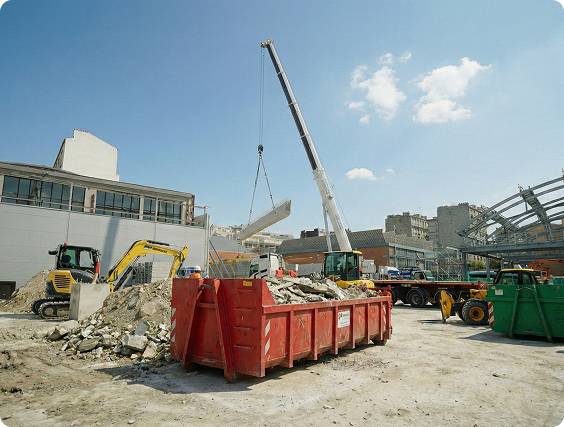
For construction sites and industrial facilities

On a construction site or industrial facility, keeping sorting and container pickups under control is critical to cut transport costs — and avoid penalty fees.


With real-time container monitoring, trigger every pickup at the right moment. No more overflowing containers. No more half-empty ones being hauled away.


Automatic sort-error detection helps you avoid reclassifications — and spot unjustified overbilling early.

Construction site
fewer unnecessary pickups
0 %
fewer reclassifications
0 %
on waste management costs
- 0 %
Waste monitoring
Real-time container monitoring

Waste Monitoring

Cut waste management and transport costs with AI.


Akanthas sensors measure the fill level of your containers and detect sorting errors.


The result: pickups always triggered at the right moment — and reclassifications avoided.

Automated inspection of incoming flows

Waste QualiCheck

Automate incoming waste flow inspections to streamline logistics and back up your decisions. Akanthas sensors analyze every drop-off to flag contaminants, objectivize reclassifications and generate a ready-to-send compliance record. Inspections that are safer, faster, and more reliable.
Waste QualiCheck
Waste Quality
Advanced waste characterization

Waste Quality

The solution that delivers advanced waste characterizations automatically — and generates the reports you need, on demand.


Our patented AI model recognizes more than 60 material categories and produces a compliance report that’s precise and ready to use.


Reduce risk for your teams and guarantee compliance across your operations.

Our technology

An all-in-one solution

Built by seasoned experts in waste management and AI, Akanthas technology slots right into your environment to streamline daily operations.
Sensors

Sensors

Our smart sensors visually analyze waste and can cover up to 4 containers each.
Our pltaform

Software platform

A complete, customizable platform to run your waste operations.
Customer stories

They use Akanthas

Explore our case studies to see how customers have transformed their logistics with our AI-powered waste management solutions.
Testimonials

What our customers say

Map of Akanthas clients in France
Akanthas

About

Who are we?

Since 2021, we’ve been building sensors and AI — driven by one conviction: waste only exists because we haven’t been able to see the true value of resources.


Our solutions turn waste management into a driver of environmental and operational performance. They support the transition to a truly circular economy.


Guided by our mission to give resources their value back, we move forward with rigor, responsibility and ambition.


Every day, we work to put technology at the service of concrete, measurable and lasting impact.

France 2030
BPI France

Download
our white paper

Today, 60% of professional waste ends up in landfill or incineration. In the face of environmental challenges, improving waste recovery is critical — for all of us.


Download our white paper to explore:

Viviana Contreras

Author

Viviana Contreras — Founder of Akanthas

Blog

Resources & news

Read the latest from our waste management specialists to stay on top of industry shifts and Akanthas news.
Frequently asked questions

Got a question?

The answer might already be here.

Recognition capability depends on the type of object, how often it appears in your flows, and the quality of the images captured.


For common objects, our models are already trained. For more specific cases, we enrich the database using your feedback and images collected directly at your sites.


Today, our solution recognizes several categories of hazardous objects, such as:

  • Aerosol cans
  • Silicone cartridges
  • Nitrous oxide canisters
  • Car batteries, etc.

There are still some limits. Very small objects (for example a lithium battery) can be hard to identify, especially if partially hidden.


That said, our model keeps improving: the more real-world situations it sees, the more accurate it becomes. Your field feedback directly powers this continuous improvement.

Already having good results is a real strength — and it’s exactly what lets a solution like ours take things further.


We don’t replace people — we free up their time, strengthen data reliability, and reinforce traceability.


Even with strong teams, there’s always value in automating repetitive tasks, getting alerts when needed, and having objective evidence on hand in case of doubt or inspection.


That’s what makes the difference over time — especially as customer expectations, contract requirements and regulations keep ratcheting up.

The cost of an Akanthas solution depends on the volumes to monitor, your objectives, the type of flows, and your technical constraints.


We scope your needs to give you an accurate first estimate aligned with your priorities.


We offer you a fairly priced solution, genuinely adapted to your site — and capable of generating a solid return on investment.

Our AI excels at the visual identification of standard materials and objects, with precision comparable to a human operator — but in real time and at scale.


Here’s what it distinguishes today:

  • Material families: metals, plastics, glass, cardboard, wood, etc.
  • Common objects: packaging, electronic waste, textiles, etc., based on shape and appearance.
  • Visual anomalies: the presence of non-conforming materials in a flow (e.g., a tire in household waste).

What it doesn’t do (yet):

  • Chemical or molecular analysis: it doesn’t distinguish between polymers (PP, HDPE, PS…) or complex compositions.
  • Detection of traces or invisible contaminants.
  • Fine recognition of rare materials: some materials (e.g., carbon fibers, composites) require specific training with field data.

Our AI improves with your real-world data: the more it’s exposed to your flows, the sharper it gets at picking up nuances (e.g., distinguishing a plastic film from a crumpled paper bag).

Scroll to Top